The Conference Trip Planner
What a conference really costs a PhD student: the whole trip, only the funding that is promised, the cash you carry before reimbursement, the trip in months of stipend surplus, and the writing days it takes
PhDGrind's Conference Travel Budget Calculator adds up the lines you give it and takes off your funding. Its own FAQ admits what it cannot show: reimbursement usually comes after the trip, so the whole amount leaves your account first. It also cannot know which lines you forgot, which funding is only applied for, or what the trip does to your stipend month and your writing weeks. The Conference Trip Planner puts the site's tools in order for one trip. In its worked example, a quick estimate of a three-day conference reads $1,564.00 and, with a grant and an award counted, $514.00 out of pocket. Counted as the five-day trip it is, with only the promised grant, it is $1,521.84, and $2,271.84 is carried until the reimbursement arrives: 7.7 months of a $200 stipend surplus. The planner then asks for the grant to be paid direct, prices a lean version, and finds the one figure ($259.92) to ask the lab for, and it counts the seven writing days the trip takes (370 to 391 words a day). Every figure is computed from the site's own calculators and tagged as an example; funding rules are your university's and your funder's, stipend taxation varies (check locally or with your university), nothing is tax or investment advice, and a pace plan is a plan, not a finish date. You get a 23-page printable PDF: seven steps, a trip budget sheet, a float calendar, a claim log, a months-of-surplus table and a quickstart, plus a personalised sheet worked from the numbers you enter in the calculator you came from.
Look inside
Two full pages from the planner, exactly as printed. Click either to read it at full size before you decide.
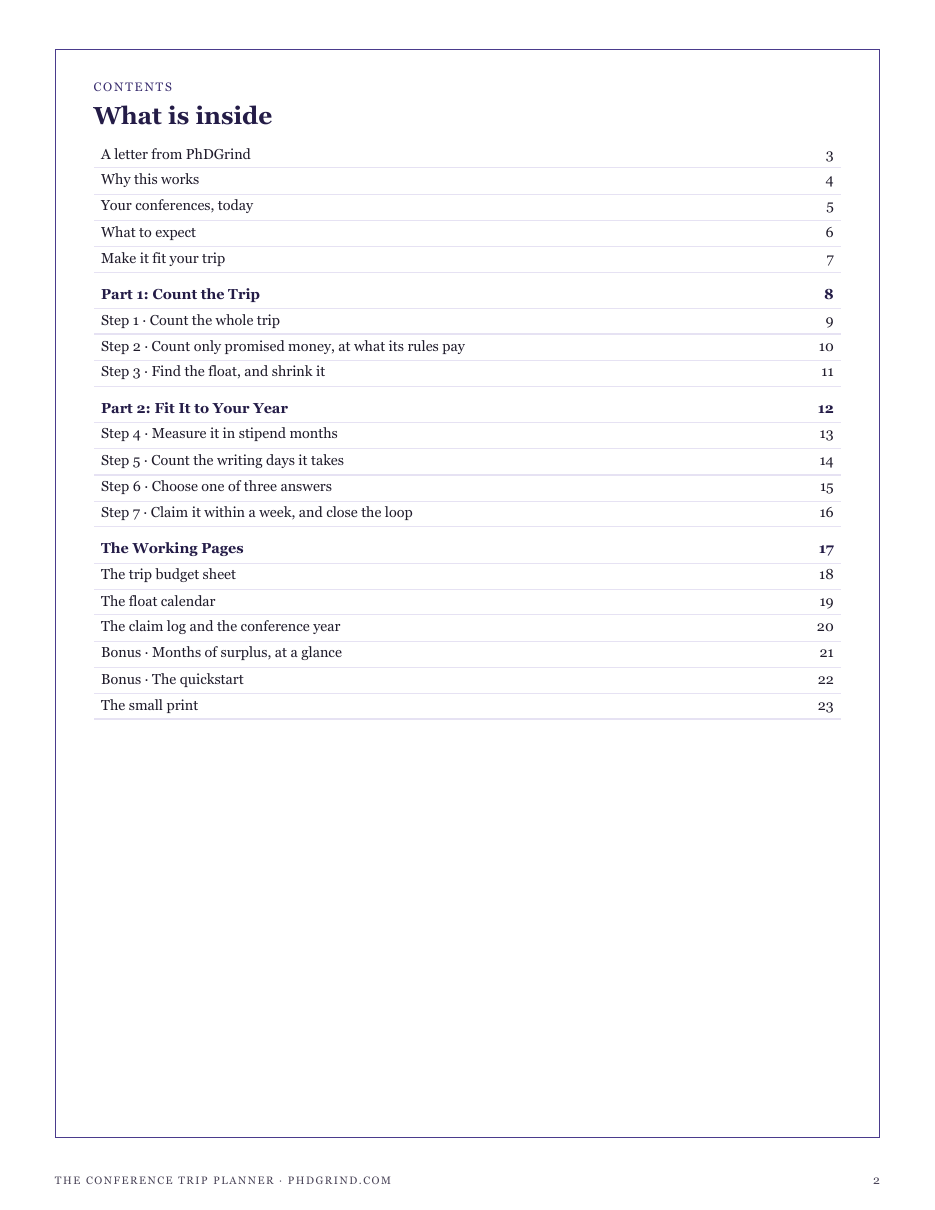
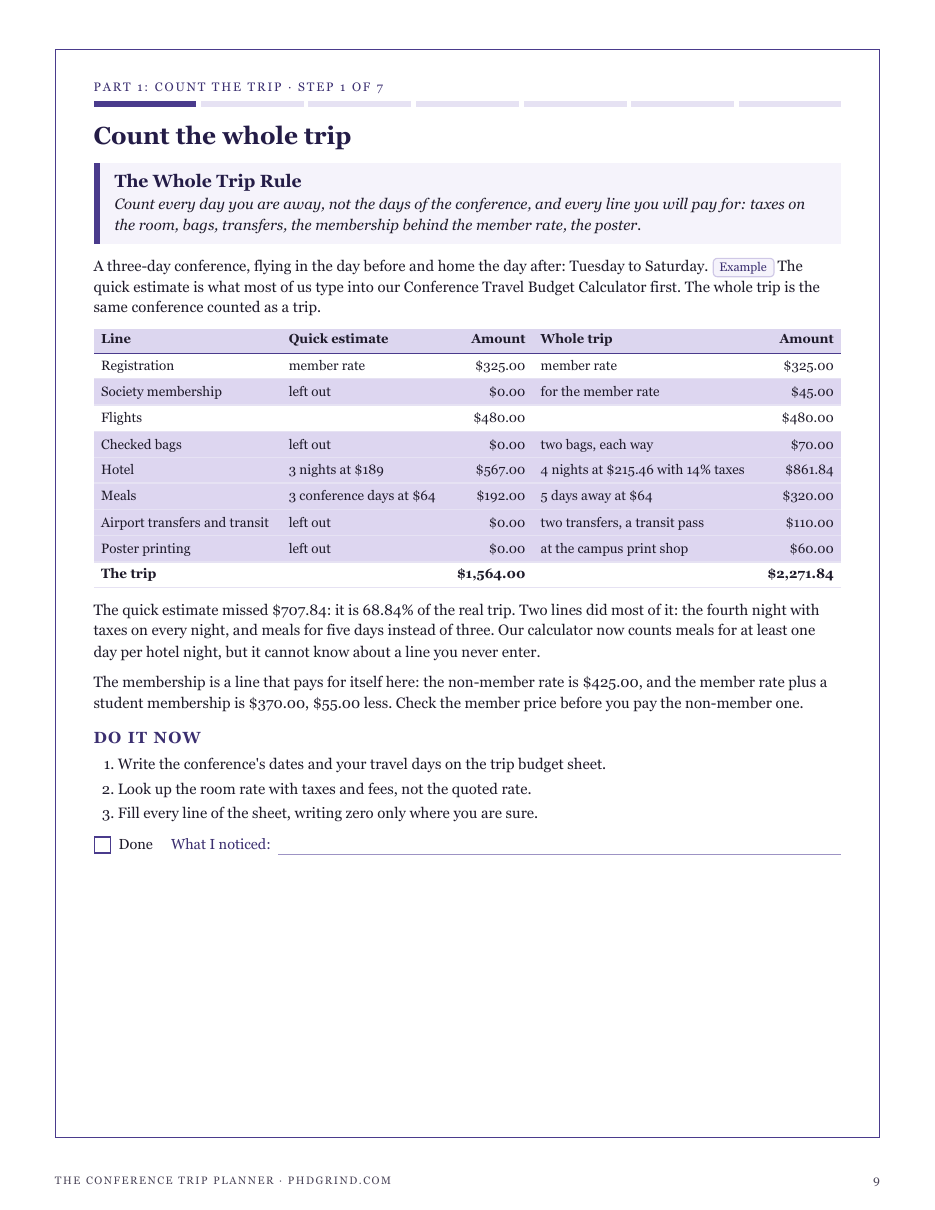
What is in it
- The Whole Trip Rule: every day away and every line counted, room taxes, bags, transfers, the membership and the poster
- The Promised Money Rule: funding counted only when awarded, at what its caps and per diem pay on your receipts
- The Pay-It-Direct Rule: the float on a calendar, and the grant asked to pay before you do
- The One Month Floor: the trip in months of stipend surplus, and the float against savings above a month of costs
- The Writing Days Rule: the days a trip takes out of the thesis, and the new daily quota, revisions kept back
- The Three Answers Rule: go, go lean or ask for one number, or not this one
- The Claim-in-a-Week Rule: receipts, the claim, a chase date, and the year's conference line
- The trip budget sheet, the float calendar and the claim log (printable)
- Months of surplus at a glance, and words a day by writing days left
- The quickstart, and a personalised sheet worked from your own calculator figures
- ✓ 23 printable pages
- ✓ 10 sections, worksheets and templates
- ✓ A second PDF worked out from the numbers you enter
- ✓ No account needed, just an email address
- ✓ Instant download; link valid 7 days
Price includes any taxes. Sold by GrabURL, who handle checkout and support. The charge appears on your statement as GrabURL.
The planner picks up where the free Conference Travel Budget Calculator leaves off. The calculator totals the lines you give it and nets off your funding; the planner counts the whole trip, only the money that is promised, and the float you carry before reimbursement, then measures it against your stipend month with the Stipend vs Cost-of-Living Calculator and against your writing weeks with the Dissertation Writing-Pace Planner. The worked figures are examples, reimbursement rules are your university's and your funder's, and nothing here is tax advice.